
The Morning That Changed Everything
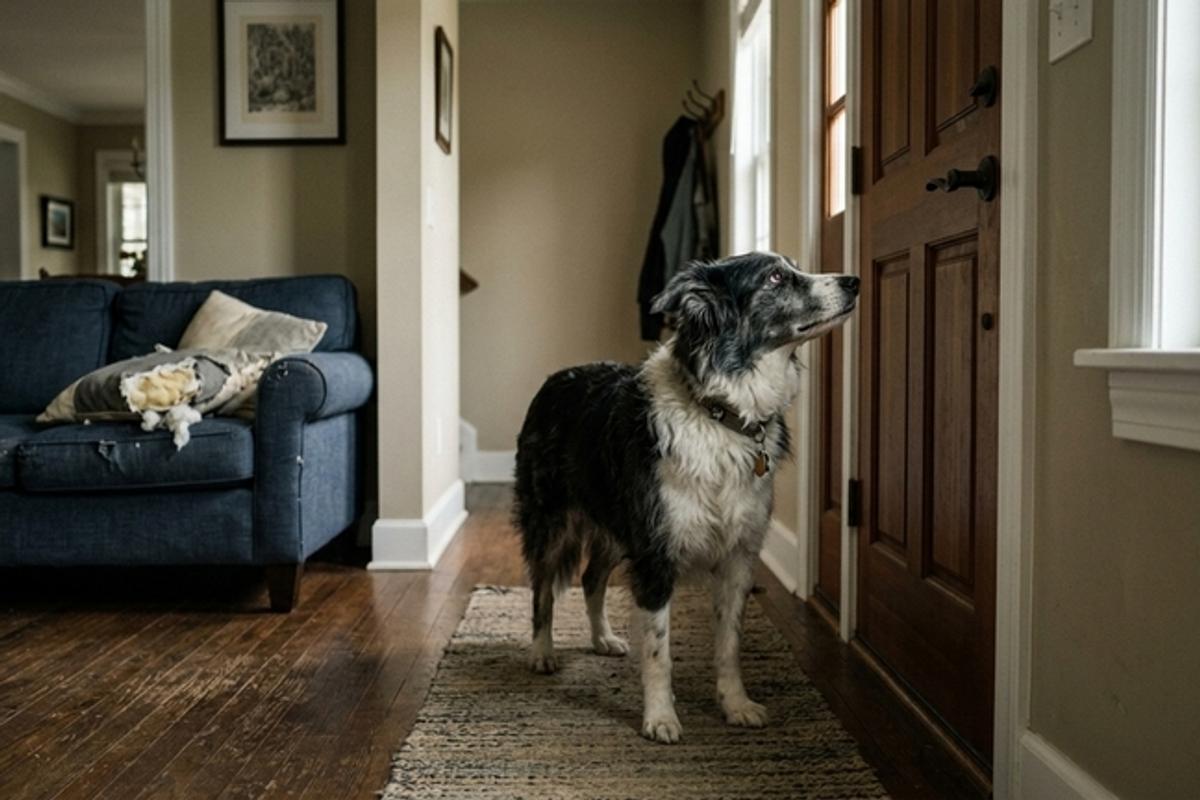
Rachel Okonkwo had owned dogs her entire life, but nothing prepared her for what she found when she came home to her two-year-old Border Collie mix, Scout, for the first time after returning to her marketing job in Austin, Texas. The couch cushion was shredded. The blinds near the front door were bent sideways. Scout had also soiled the kitchen floor — something she hadn't done since puppyhood.
"I genuinely thought something had scared her," Okonkwo said. "Like maybe a loud noise or someone at the door. I didn't want to believe it was me leaving."
Read Also: Hot Spots Develop in Hours. Spring 2025 Guidelines Change Treatment Completely
The Numbers Behind the Worry
A national survey reported in dvm360 found that roughly one in three pet owners — 33 percent — believes their dog suffers from separation anxiety. That's a striking number on its own. But what makes it genuinely significant is how it compares to what veterinarians are diagnosing. The veterinary clinical range for dog separation anxiety sits between 13 and 28 percent, meaning owners are consistently sensing something that the formal medical system is still catching up to.
300+ breeds. Find Your Match
And then there's an even starker figure. A 2025 re-analysis of U.S. C-BARQ behavioral data — the most widely used canine behavior assessment tool — put the rate of dogs showing at least some separation-related behavior at 85.9 percent, according to the Journal of Veterinary Behavior. The authors themselves flag this as an upper bound. It doesn't mean nearly every dog has a clinical disorder. But it does suggest that the vast majority of dogs show at least some distress when left alone — which means the instinct most owners have had all along may not be projection. It may be observation.
The Pandemic Made It Worse — and Return-to-Office Made It Official
Between the start of the COVID-19 pandemic in early 2020 and January 2022, over 23 million American households welcomed new canine companions into their families. Many of those dogs — quickly nicknamed "pandemic puppies" — spent their entire early development glued to their owners' sides, never learning what it meant to be alone. Then, gradually, the offices reopened. The New York Times reported that Americans spent about two extra hours at home per day in 2020 compared to the year prior. For dogs accustomed to round-the-clock company, losing even a few of those hours felt like abandonment.

A post-COVID survey by Kinship found that three quarters of respondents reported their dog shows signs of separation anxiety — with rates highest in Arizona, New York, and Virginia. That number, 76 percent, sits well above clinical estimates. But researchers point out that this gap doesn't mean owners are wrong. It means owners are using a broader, more lived-in definition — one that includes watching from the window, refusing to eat, or pacing the hallway — while vets reserve the diagnosis for dogs who genuinely cannot self-regulate.
A September 2025 survey of 600 pet guardians in the United States found that separation anxiety was the top behavioral concern among owners — a finding that researchers say aligns with broader shifts in how people understand their pets' emotional lives.
1,000+ shelters. 34,000 dogs. Find Your Match
What It Actually Looks Like
According to survey data, barking and howling accounts for 40 percent of anxious behaviors owners observe, followed by chewing household objects at 29 percent, and pacing or restlessness at 25 percent. These are not subtle signs. They are the kind that get you noise complaints from neighbors, security deposit disputes, and 11 p.m. Google searches that land you on forums full of exhausted owners asking if their dog will ever be okay.
Employees with dogs now spend an average of 682 minutes — over eleven hours — per month checking on their dogs during the workday. That's more than a full business day each month spent watching cameras, texting dog walkers, or leaving the office early because something felt off on the app. The anxiety, it turns out, runs in both directions.
When It Becomes a Clinical Problem
Marcus Webb, a certified veterinary behaviorist in Denver, Colorado, puts it plainly: the diagnosis matters less than the suffering.
"A lot of people get caught up in whether their dog 'officially' has separation anxiety," he said. "What I care about is whether their dog is in distress. If a dog is destructive, eliminating indoors, or hurting itself trying to escape — that animal needs help, not a label debate."
Read Also: Raw Dog Food Market Hit $4.38 Billion. Freeze-Dried Format Dominates Growth
Between 20 and 40 percent of dogs seen by veterinary behavior specialists are formally diagnosed with separation anxiety, making it one of the top three reasons dogs end up in front of a behaviorist. The condition frequently overlaps with noise phobia and generalized anxiety, which is one reason the diagnosis can take time. Most owners arrive after months — sometimes years — of trying to manage it on their own.
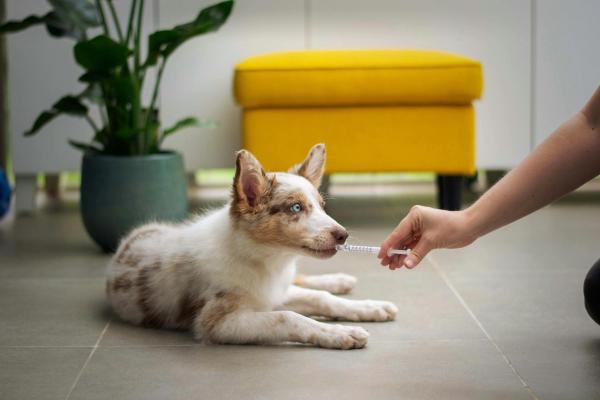
Treatment options have expanded significantly. The ASPCA recommends a combination of behavior modification and medication for most dogs with separation anxiety, noting that anti-anxiety medication can help a dog tolerate isolation without experiencing acute distress and can accelerate the overall treatment process. Desensitization — gradually teaching a dog that short absences are survivable, then building from there — remains the gold standard, but it requires consistency and patience that many full-time workers struggle to provide alone.
Read Also: 73% of Dogs Have Dental Problems. Pet Dental Market Hits $10.91 Billion in 2026
What Owners Can Do Right Now
Sixty-three percent of pet owners say they would like more support and guidance in understanding their dog's health and behavior, and 70 percent say they would be willing to try telehealth veterinary services if available. The demand is there. The barrier, more often than not, is knowing where to start.
Veterinary behaviorists and certified professional dog trainers recommend beginning with video monitoring before assuming the worst — or dismissing a hunch. Set up a phone or camera on the first few departures and watch what actually happens. Many owners are surprised to discover the anxious behavior begins within the first four minutes of leaving. Others find their dog settles after ten. The difference matters enormously for how you approach treatment.
Rachel Okonkwo started working with a local trainer in Austin six months ago. Scout still watches the door when Rachel leaves. But the couch is intact. The blinds are fine.
"She still needs to know I'm coming back," Rachel said. "She just knows now that I will."
Most dogs do learn. They just need someone to teach them — and an owner patient enough to believe that what they noticed was real in the first place.