
The Rash That Spread Overnight
When Robert Kennedy noticed a small red spot on his Lab's shoulder one morning in June 2025, he thought nothing of it. By evening, the spot had grown to the size of a quarter—raw, oozing, and infected. By the next morning, it covered his palm.
"I was shocked how fast it spread," Robert said. "The vet explained that hot spots develop within hours once a dog starts licking and scratching. What I saw was the end result of intense self-trauma."
Read Also: Chronic Kidney Disease Affects 1 in 4 Senior Dogs. New Vitamin D Treatment Shows Promise
Hot spots, medically called acute moist dermatitis, are among the most frustrating seasonal skin conditions in dogs. They appear suddenly as red lesions with pus on the surface, intensely itchy and painful. Owners assume they're moisture-related—hence the name "hot spot." They're wrong.
The Myth That Won't Die
In July 2025, Virginia Tech's veterinary dermatology team published research debunking the moisture myth.
"Hot spots are not produced by excessive moisture," said Dr. Ivan Ravera, a board-certified veterinary dermatologist. "They're produced by your dog. The dog licks or scratches in response to itch, discomfort, or pain. That self-trauma creates the lesion."
Environmental allergies and flea-bite allergies are the primary triggers, particularly in spring and summer. A dog with undetected fleas may lick obsessively, creating a hot spot within hours. An allergic dog scratching at seasonal pollen exposure can self-inflict significant damage rapidly.
Jennifer Park's Beagle developed a hot spot on her back during summer.
"I immediately thought it was from swimming or humidity," Jennifer said. "The vet found fleas. That was the whole problem. One flea bite triggered obsessive licking, which created the hot spot. We treated the fleas, the licking stopped, and the hot spot healed."
The Treatment Revolution
Spring 2025 brought a major shift in treatment guidelines. Veterinary antimicrobial standards now recommend topical therapy as the treatment of choice for hot spots—not oral antibiotics. This represents a significant change from older protocols that relied on systemic medication.
Read Also: Raw Dog Food Market Hit $4.38 Billion. Freeze-Dried Format Dominates Growth
Topical antimicrobial treatments directly target bacteria in the lesion while avoiding antibiotic resistance concerns. To address the itch and pain that drives continued licking, oral medications may be prescribed: steroids, oclacitinib, ilunocitinib, or even pain killers. The combination stops the itch-scratch cycle while topical treatment heals the wound.
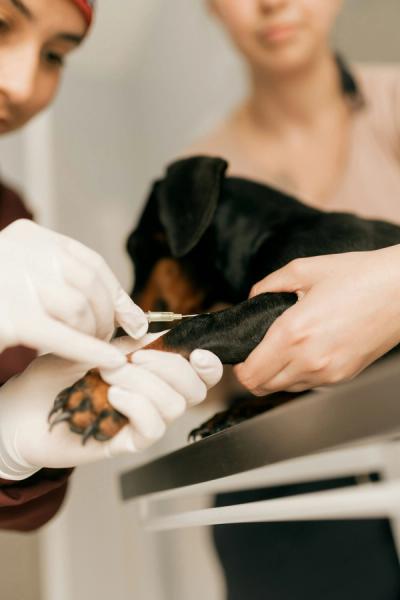
Marcus Chen's rescue dog developed a hot spot on her rear end.
"The vet prescribed a topical spray and an oral anti-itch medication," Marcus said. "Within three days, she stopped licking the area. Within two weeks, it was healed. The old treatment would have meant oral antibiotics for weeks."
Finding the Real Problem
Critical to successful treatment is identifying the underlying cause. Hot spot location provides clues: back suggests fleas, rear end points to anal sac issues, cheek indicates ear infection. Without addressing the root cause, hot spots recur.
300+ breeds. Find Your Match
"Once we control the underlying problem—fleas, allergies, anal sac disease—the dog stops licking and scratching," Dr. Ravera explained. "Once that stops, hot spots don't develop. The key is investigation, not just treating the lesion."
Rachel Kim's dog developed hot spots between her toes.
"The vet identified environmental allergies," Rachel said. "We started allergy management, and the hot spots disappeared. Now they only appear briefly during high pollen season, and we manage them proactively."
Prevention Through Early Action
Hot spots are more common in indoor dogs, thick-coated breeds, and dogs with skin folds where moisture can trap bacteria. Early detection prevents rapid spread. Owners should examine their dogs weekly, particularly during warm months, looking for any red areas or excessive licking.
1,000+ shelters. 34,000 dogs. Find Your Match
The moment a hot spot appears, intervention is critical. Waiting even a day allows it to expand. Professional grooming to remove hair around lesions, combined with topical treatment and oral anti-itch medication, stops the escalation quickly.
David Thompson treated his senior dog's hot spot within hours of noticing it.
"The vet said fast treatment prevented it from spreading further," David said. "If I'd waited a week, it probably would have covered half his side."