Sarah Kim walks six dogs professionally in Denver, and public dog parks are her nightmare. On a Tuesday morning in February 2026, she showed up with three clients—a reactive German Shepherd, a timid Beagle, and an overly friendly Golden Retriever. Within five minutes, an off-leash Pit Bull charged the group. The owner was nowhere in sight. The German Shepherd lunged. The Beagle panicked. Sarah spent twenty minutes untangling leashes and calming dogs.
She left the park, pulled out her phone, and booked a Sniffspot.
300+ breeds. Find Your Match
How Sniffspot Works
Sniffspot operates like Airbnb, but instead of renting spare bedrooms, homeowners rent out their backyards to professional dog walkers. The platform guarantees Sarah the entire space to herself for a set period—usually an hour—with no other dogs, no surprise encounters, and no chaos. She pays roughly $30 per hour. For Sarah, who manages multiple reactive or anxious dogs daily, the cost is worth it.
"Public parks are a gamble. You never know who's going to show up or if the owner has control. With Sniffspot, I know exactly what I'm getting. I can let the dogs off-leash, work on training, and not worry about some random dog ruining the session."

Targeting Professional Dog Walkers
Sniffspot's business model specifically targets professional dog walkers, not casual pet owners. While individual owners can book spaces, the platform's core market is walkers managing multiple clients throughout the day. For professionals, the value proposition is clear: safety, predictability, and control. A single incident at a public park can mean lost clients, liability issues, or injured animals. Sniffspot eliminates that risk.
The platform emerged in response to a growing problem: dog ownership surged during the pandemic, but training didn't keep pace. Millions of dogs adopted in 2020 and 2021 grew up with limited exposure to other animals and inconsistent training. When owners returned to offices and hired dog walkers, the walkers inherited poorly socialized dogs that couldn't handle public parks.
Homeowners Earn $500-$800 Monthly
Michael Torres owns a half-acre property in Portland with a fenced backyard he rarely uses. He listed it on Sniffspot in late 2024 and now earns between $500 and $800 per month.
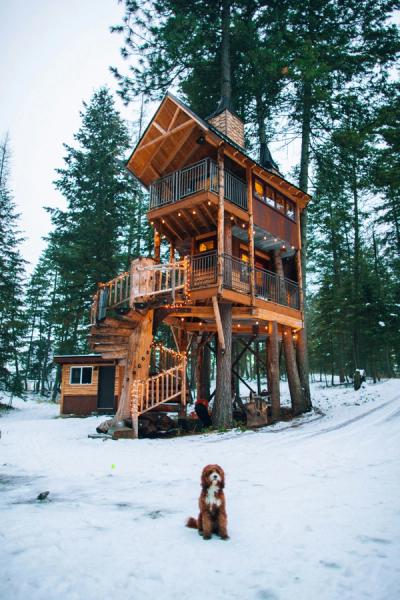
"I'm at work all day. The yard was just sitting there. Now I'm making money off it, and the dogs get a safe place to play."
Pricing varies based on location, yard size, and features. Urban backyards in high-demand areas like Seattle or San Francisco can command $40 to $50 per hour. Larger properties with agility equipment, swimming pools, or shaded areas charge premium rates.
Why Private Space Matters
Lisa Nguyen, a professional dog walker in Seattle, books Sniffspot yards five times per week. She manages dogs with behavioral issues—separation anxiety, leash reactivity, fear-based aggression. Public parks aren't an option.
"One bad experience can set a dog back months in training. If I'm working with a reactive dog and someone's unleashed Lab comes bounding over, all that progress is gone. Sniffspot lets me control the environment."
The platform also addresses a practical issue: even well-behaved dogs benefit from private space. A dog walker managing a single calm dog still faces unpredictability at public parks. Sniffspot guarantees the walker has the space entirely to themselves, even for a solo walk.
Premium Features Drive Demand
Marcus Elliott owns a property in Austin with a large backyard and installed basic agility equipment after noticing dog walkers were willing to pay more for enrichment features. He now charges $35 per hour and books the space nearly every weekday.
"I didn't expect this much demand. But once word got out that I had tunnels and jumps, the bookings doubled."
The shift reflects broader trends in pet services: personalization, safety, and convenience. Traditional dog parks are public, unpredictable, and often overcrowded. Sniffspot offers the opposite—private, controlled, and available on demand.
Changing How Dog Walkers Work
For homeowners, the platform offers passive income with minimal effort. Once the yard is listed, bookings happen automatically. The platform handles payments, insurance, and scheduling. The only requirement is a fenced yard and a willingness to let strangers use it.
Sarah in Denver now books Sniffspot yards three to four times per week. The consistency has improved her work significantly. Dogs that were too reactive for public parks are now able to run off-leash in controlled environments.
"It's changed how I work. I used to spend half my time managing other people's dogs and dealing with conflicts. Now I can focus entirely on my clients. The dogs are happier. The owners are happier. And I'm not constantly stressed about what might go wrong."
The growth of Sniffspot reflects a larger shift in pet services. Just as Uber and Airbnb disrupted transportation and lodging by leveraging unused resources, Sniffspot is doing the same for dog exercise. Backyards that sat empty are now generating income. Dog walkers who struggled with public parks now have reliable alternatives.
Source: Top 27 Pet Trends of 2026 - Glimpse, 2026